
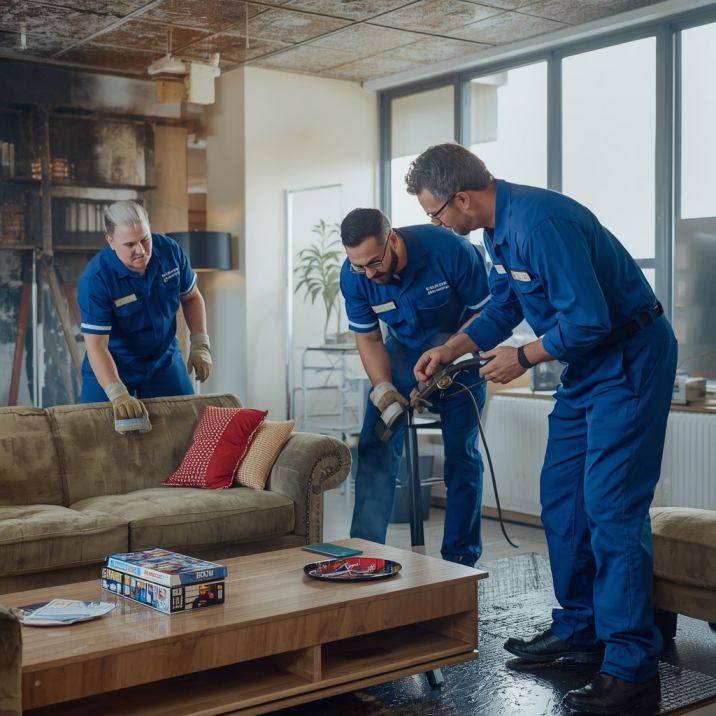
A material-by-material guide to what survives smoke damage, what professional restoration can save, and what should be safely discarded
Smoke damage looks worse than it often does. So, Can Smoke-Damaged Items Be Restored? The answer is yes. But remember, some items need to be discarded for safety concerns. But you can restore furniture, electronics, photographs, documents, and so many other valuable items using professional restoration methods. Ultimately, the outcome will depend on the material, the nature of the damage, and the speed at which you begin the restoration process. This guide explores each material one by one so you can quickly know what’s most important. It also defines what safety concerns each item demands and what restoration experts can save.
The Three Factors That Determine What Can Be Saved
Before you sort items into keep, restore, or trash, you need to understand three factors that influence the restoration outcomes. However, the vast majority of properties are in between full loss and full recovery.
Factor 1: type of exposure
Items that expose only smoke damage can be easily restored. The effects of direct flame contact are at the sub-microscopic level and often cannot be recovered. The secondary issue is firefighting water. It can also absorb content, spread mould, and contaminants in 24 to 48 hours.
Factor 2: material porosity
Material type matters. Non-porous materials like metal, glass, and closed wood do not allow smoke to penetrate. However, porous materials like fabric, paper, or unsealed wood absorb the smoke particles and odours to a greater degree of depth.
Factor 3: response speed
Response time is a big factor in every fire damage restoration assessment in Sydney. The soot contains acidic compounds that can etch the surface in a short period of time, 72 hours. Also, smoke odours penetrate deeper over time. Mould can start to grow on paper that has been wet in 24 to 48 hours. Hence, such factors influence each restoration decision that will be made.
Furniture – Solid Wood, Metal, and Upholstered Pieces
Furniture often survives smoke damage better than you expect. Typically, materials such as solid wood or metal components have good restoration capacity, as they do not allow deep smoke penetration. Moreover, restoration techniques to remove surface, soot, and smoke residue cleaning and refinish the surface of sealed timber can restore their appearance. Other non-absorbing items, like glass, tabletops, ceramic details, and decorative inserts, also work well.
Upholstered furniture is more difficult to restore. Fabric, foam, and padding deeply trap smoke particles and odours. Hence, deep cleaning, steam treatment, and deodorising processes are preferable in case of smoke damage to sofas, chairs, and mattresses. But water-saturated upholstery poses more difficult restoration situations as it raises the risk of mould growth.
So, the fire-damaged furniture restoration Sydney team needs to assess each piece individually. They restore fixed cabinets and joinery on-site. But portable furniture needs a specialised facility. But if the fire weakens or chars structural timber, then replacement often delivers a safer and more practical outcome.
Electronics and Appliances
Do not switch on any smoke or fire-affected electronics before a professional inspection. Over time, soot produces corrosive compounds that cause further damage to circuits and internal components. Thus, when it’s on, you can activate electrical failures, shorting out, or even a secondary fire.
Even with this risk, there are many electronics that survive a smoke exposure. Devices that were only exposed to smoke but never to open flames or to a significant amount of water may respond well to professional restoration. The professional cleaning also takes apart the unit, cleans its internal parts, and removes corrosive materials before it causes permanent damage. This process can bring back television, audio equipment, household appliances, and many other items.
In contrast, direct flame exposure creates a different outcome. The heat warps parts and ruins internal circuits. Water exposure also makes restoration difficult if significant. In such situations, replacement may be a better option than repair.
Many smoke-damaged electronics restoration Sydney teams focus on response time. A humid environment enhances corrosion, and time makes it worse. Even if the data cannot be fixed, hard drives and storage devices may still save the data. As a result, early response time and assessment provide optimum data recovery.
Documents and Photographs
Paper items often restore better than expected after fire damage. You might believe that documents and pictures fade away forever. But the highly advanced methods can help you recover a lot of these items. The vacuum freeze-drying technique is among the most useful ones. Firstly, they freeze the documents and then place them under a vacuum where ice vaporises. This also prevents liquid water damage, which typically causes fibre warping, sticking, or separation. The Library of Congress (LC) uses the same technique. Additionally, the National Archives and Records Administration (NARA) also approved the vacuum freeze-drying method for water-damaged books and records.
In cases of fire-damaged document restoration in Sydney, smoke-only exposure often allows partial recovery. Specialised dry cleaning sponges help you remove soot without spreading it. Charred edges can lose some information, but most of the page remains readable. Photographs need more delicate handling. Smoke can also penetrate the emulsion layer, and specialists may use microcleaning tools to restore clarity. The emulsion will crack above approximately 60°c which will reduce recovery.
Overall, outcomes may differ significantly depending on the exposure. Paper can become mouldy in only 24 to 48 hours after being soaked in water. So, rapid freezing is the only way to keep a paper preserved until it is restored.
Clothing, Curtains, and Soft Textiles
You can easily restore soft furniture in case of only smoke damage. Fabrics, curtains, and other materials typically store smells in the fibers. But with a specialist treatment, you can remove the majority of contaminants. Smoke-damaged clothing restoration in Sydney involves dry cleaning combined with high-end deodorising techniques like ozone or controlled wet cleaning. These processes go beyond normal washing and penetrate deep into small particles.
Even a regular wash cycle in your washing machine would not get rid of the smell of smoke. Often, it will temporarily cover up the fumes, but they will typically return as the fabric dries out. Also, when direct flame contact, scorching, or melted synthetic fibres are visible, it’s usually best to replace instead of repair.
Hard Surfaces – Floors, Tiles, Countertops
Hard surfaces generally provide excellent post-fire restoration results. If the floors are not directly burned, you can usually restore them easily through sanding and refinishing. It cleanses the outermost portion of the wood, freeing up soot, smoke residue, and trapped odours. Smoke-damaged flooring restoration Sydney team recommends acting quickly to avoid further absorption.
Tiles, stones, and sealed countertops are also items that will respond well to early cleaning. In most cases, alkaline cleaning will remove soot and neutralize odours without leaving permanent stains. The most important thing is timing. Soot is an acid and will start to etch surfaces in 48 to 72 hours.
A rapid response is also essential to protecting finishes and enhancing final results. But if the damage sets in longer, restoration becomes more difficult and may require resurfacing instead of cleaning.
Items That Should Generally Be Discarded – Not Restored
There are some items that cannot be returned to safe use after a fire. Food, medication, and cosmetics that have come into contact with the smoke, heat, or firefighting chemicals should be disposed of immediately. They may appear normal, but might be contaminated and unsafe to use. So, when deciding what to throw away after a fire, focus on health and safety instead of looks.
Mattresses, pillows, and other deeply smoked items with high smoke content are seldom salvageable. The fibers in them soak up smoke and odours, so strong cleaning is not possible. Content restoration also does not apply to severely burned drywall, insulation, and other structural components. They are included in building restoration matters instead of content matters.
Melted, warped, or deformed plastic loses strength and can release toxic substances. In such situations, replacement is the only safe choice.
How Professional Contents Restoration Works
Professional content restoration is a systematic process that safeguards content and claims. Teams begin with on-site inspections to determine what they can address on-site and what they need to remove from the site. They produce a comprehensive list of items, including images for documentation. The professional content restoration Sydney team plans this stage carefully before any pack-out. In addition, IICRC S700-certified techniques apply strict handling and cleaning procedures to ensure consistent results.
After that, teams pack out to any specialist facility for ultrasonic cleaning, freezing, or deodorising. All items in and out are documented under ISO 9001 with photographic evidence. Hence, it helps with insurance claims for both recovery and disposal of contents. Also, if there is broader structural work, experts will connect the fire restoration work. In several cases where smoke odour is still present even after cleaning, teams also apply smoke odour decontamination in Sydney to finish the job.
Frequently Asked Questions
Q1: Can smoke-damaged clothing be saved?
Yes, for most cases, only if exposed to smoke and not to flame or melting. A normal washing machine cannot remove embedded odour. It is only removed through cleaning and specialist deodorising. Normal washing can temporarily remove the smell, but it won’t go away. Moreover, synthetic fibers that have burned or melted must be thrown away.
Q2: Are smoke-damaged photos and documents really worth trying to save?
Often yes. The Library of Congress and the National Archives have approved the vacuum freeze-drying method, which has restored many damaged documents and photographs. With edges charred, you can recover core information. That’s why quick action matters. You can also freeze these products in a household freezer to prevent mould for 24 to 48 hours while arranging professional restoration.
Q3: Is it safe to turn on electronics after a fire?
No, it is not. Avoid using electronics after a fire. Soot is corrosive and continues to corrode internal circuits, particularly in hot and humid environments. However, using electronics can lead to shorting out and additional losses. Turn off the electricity and arrange a professional inspection. Smoke damage is typically recoverable, but fire and water damage lower the odds of recovery.
Q4: What furniture can be restored after smoke damage?
Smoke damage typically does not affect solid wood and metal furniture, which tends to restore better. These surfaces can be mopped or refinished to remove the soot. The recyclability of glass and ceramics is also easy. Upholstery furniture is more difficult as smoke gets deep into the fabric. But if there is no fire and water damage, steam cleaning and deodorising can often be effective.
Q5: What items should be thrown away after a house fire?
Must discard those food, medication, and cosmetics that are exposed to fire, even if they look normal. Upholstery materials like mattresses and pillows allow deep smoke penetration. Hence, restoration will not be worth it as the trap smokes deeply. However, melted or warped plastics and severely charred structural materials need to be discarded rather than restored.
Q6: Can smoke-damaged items be restored after a house fire?
Yes, professionals can restore many smoke and fire-damaged items, but results depend on the material, smoke contamination, fire exposure, and response time. Cleaning and refinishing will work well with most types of solid wood, metal, glass, ceramics, and sealed hard surfaces. However, professional technicians can often restore electronics after smoke exposure if owners avoid powering them on before inspection and cleaning. Vacuum freeze drying is also effective for rescuing documents and photographs. But objects that come into direct flame contact melt or char heavily, generally not restorable for safety concerns.
Q7: How does vacuum freeze-drying restore fire-damaged documents and photographs?
Vacuum freeze drying restores paper documents through cooling and transfers them into a vacuum chamber. The ice then evaporates directly, preventing liquid water from causing warping, sticking, or breaking of the paper fibres. As a result, it ensures safe recovery of sensitive records. The Library of Congress uses this technique, and the National Archives Record Administration approves it for damaged books and photographs. It enables them to restore materials that seemingly appear hopeless of recovery when treated promptly.
Q8: Is it safe to use electronics that were exposed to smoke during a fire?
No, never turn on electronics before a professional inspection after a fire. Soot is corrosive and keeps harming circuit boards, connectors, and other parts inside over time. Heat and humidity also speed up this process. However, if they turn on, they can cause short circuits or electrical hazards during a fire. Hence, only smoke exposure has good restoration potential when exposed to direct flames or water. Professional technicians can get to the inside parts and slow down the corrosion process before it can cause permanent damage.
Q9: What determines whether a fire or smoke-damaged item can be restored?
Three primary factors will tell you whether you can restore an item after smoke or fire damage. The type of exposure is most important. Only smoke damage provides better recovery than direct flame contact, charring, or water damage. The porosity of the material is also very important. Non-porous materials such as metal, glass, and sealed wood do not suffer any damage. However, porous materials such as fabric, paper, and unsealed wood absorb contaminants deeply. The response time is important, as soot is acidic and starts etching surfaces in about 72 hours. Also, wet paper can develop mould in 24 to 48 hours if not treated immediately.
Q10: What items should not be restored after a house fire?
Some items cannot be safely restored after a house fire. Smoke or firefighting chemicals can turn food, medicine, and cosmetics into danger even if they appear to be alright. Also, heavy upholstery items with deep smoke absorption, like mattresses and pillows, will not be restored as they are likely to trap contaminants. If fire causes severe charring in drywall or insulation, building contractors replace these materials as part of structural repair work. Heat can melt or warp plastics, weaken their structure, and release harmful chemicals, so homeowners should discard them immediately.
Before you assume an item is a total loss, get a professional assessment. Candid Cleaners IICRC S700 certified fire restoration Sydney team evaluates fire and smoke-damaged contents item by item, saving what can genuinely be restored. [Book a free assessment →]
