
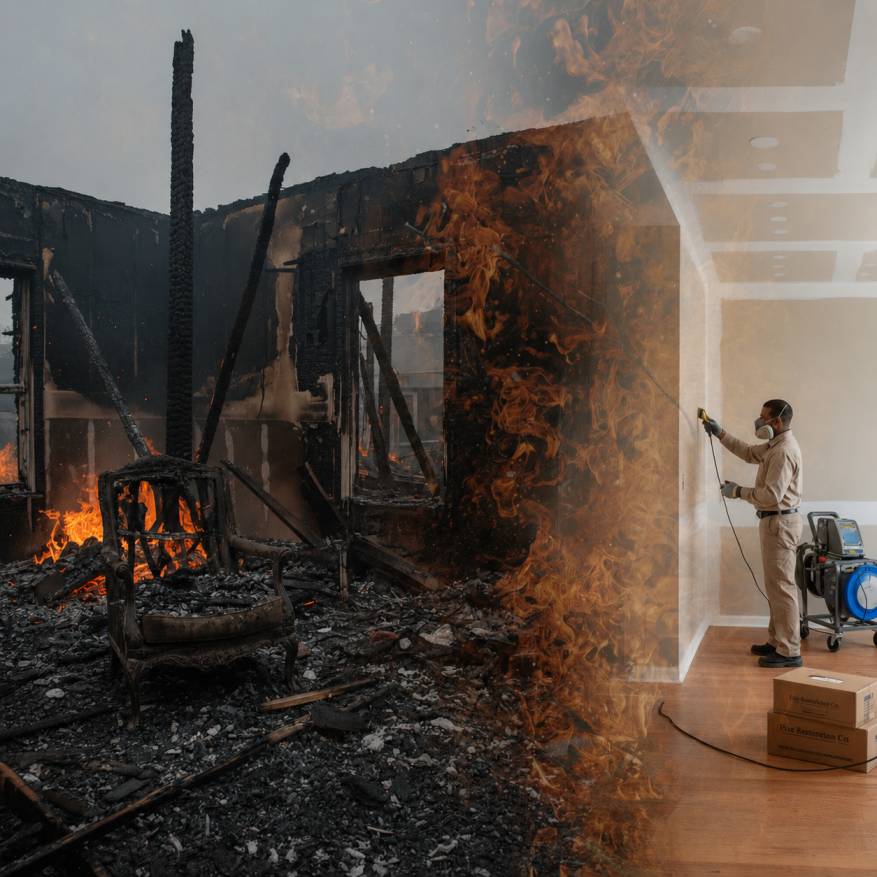
Once the fire is extinguished and everyone is safe, it’s important to know what to do after a house fire. The first 24 hours will determine the extent of your home and property that can be recovered and the overall process of your insurance claim. This guide outlines each step from when Fire and Rescue NSW has determined it’s safe to enter the property at the point where professional restoration is initiated.
You’ll learn immediate safety measures in the first hour, property securing measures within the first 24 hours, insurance requirements within 48 hours, and restoration planning within the first week. Moreover, you’ll discover how NSW Fire, Rescue, and Insurance are the key support throughout the process.
Step 1: Confirm Everyone is Safe and Seek Medical Help
Your priority should be people, not the property. Check every occupant is out of danger, including children, elderly members of the family, and pets. Call 000 for burns, breathing problems, smoke inhalation symptoms, or any other injuries. These are also the most critical after-house-fire safety steps that should be taken before cleanup and documentation.
Do not enter the property until Fire and Rescue NSW has declared it safe to re-enter. After the fire has been extinguished, structural damage, background fires, and air quality may still be hazardous. Fire and Rescue NSW can also make a referral to Salvation Army support services for emergency accommodation and counseling. For additional assistance and damage due to storm activity, call NSW SES on 132500.
Step 2: Do Not Re-Enter Until Fire and Rescue NSW Clears the Site
Another critical safety step most of you skip. Floors, rooms, and stairs can collapse due to structural failure after heat exposure. Smoke contains harmful residues such as carbon monoxide and chemicals from the molten substance. Also, the electrical system can still have live power even after water damage. Hence, Fire and Rescue NSW will advise when the re-entry is safe.
Asbestos is commonly found in Sydney houses built before 1990, particularly older apartments and terrace houses, which become airborne during a fire. A licensed asbestos assessor checks the site before access when materials may be affected. This is an important step in what to do after a house fire. Overall, understanding the house fire property re-entry in NSW guidance helps you avoid hidden dangers and damage within the home.
Step 3: Secure the Property Against Further Damage
Once Fire and Rescue NSW hands back the site, you are responsible for securing it. Protect openings to stop weather damage and unauthorised entry. Cover all holes, cracks, and roof openings. Also, you can hire a fire restoration company if possible to minimise the risk and to accelerate the job. Temporarily repair external doors and then lock them.
If you’re a tenant, notify your landlord or real estate agent as soon as possible about the damage. Do not leave the property unsecured. However, if you’re living in a strata building, inform the strata manager if the shared area or structure is impacted. It’s another vital step in securing the house after a fire in Sydney. Candid Cleaners, an IICRC S700-certified fire damage restoration company, can help you in this stage as the emergency response.
Step 4: Document Everything Before Touching Anything
This step will impact your insurance result. To document a fire damage insurance claim in Sydney, take clear photos of each item before moving or cleaning. You can also make an in-depth video tour of every affected room from multiple angles. Photograph all the damaged contents in place and capture smoke, fire, and water damage clearly.
You should not throw anything away. Keep all damaged items with you for the insurance assessor. Cleaning does not begin until your insurance company approves it. However, even a slight change can have an impact on the assessment claim.
Moreover, record approximate values of damage items whenever possible. Maintain all records in one place. A professional restoration company like Candid Cleaners prepares a complete photographic scope of work as part of its assessment. As a result, this documentation is formatted according to insurers’ ISO-9001 requirements, which enhances the accuracy of your claim rather than your own incomplete documentation.
Step 5: Contact Your Insurer Within 24 Hours
Call your insurance company within 24 hours of a fire. Most Australian home insurance and contents policies will require notification within 24 to 48 hours. But if you delay the report, then it will have a negative impact on your claim. Tell them the time, date, and cause of the fire. Also, provide them with the Fire and Rescue NSW report number and whether your property is habitable.
It is the first stage of the fire damage insurance claim in Australia. Most policies will include coverage for fire damage, smoke damage, soot, firefighting water damage, and temporary accommodation if the property is uninhabitable. You can ask about emergency housing under Additional Living Expenses. You can inquire whether they have a preferred restoration provider. Check whether you must wait for inspection before any work begins.
Additionally, for claim advice and insurer contact, consult the Insurance Council of Australia.
Step 6: Arrange Temporary Accommodation if Needed
Arrange temporary accommodation after a house fire in Sydney as soon as your insurer confirms the property is uninhabitable. Most Australian home insurance policies will include coverage of Additional Living Expenses (ALE) from day one. You can verify the approval before booking to avoid rejected costs. Moreover, for emergency support, you can contact Red Cross assistance, Salvation Army, Fire and Rescue NSW, and local council emergency housing.
On the other hand, the building insurance generally does not cover temporary accommodation in strata properties. But insurance contents will cover it if it is included in Additional Living Expenses (ALE).
Step 7: Call a Professional Fire Restoration Company
Call a professional fire restoration Sydney company as soon as possible. Do not use general cleaning methods since the soot is acidic and would spread upon wiping with water, causing permanent staining. Smoke damage restoration in Sydney needs specialist equipment, as smoke travels through wall cavities, HVAC systems, and subfloors, not just floor surfaces. IICRC S700 certified technicians also follow strict international standards for complete fire and smoke restoration.
Certified fire restoration professionals like Candid Cleaners begin with a same-day assessment. They secure your property, if necessary, take water damage contents, inventories, and documentation, and perform water extraction during firefighting water damage. Then they use professional smoke odour decontamination techniques to remove the soot, dry the structures, and treat the odour.
They also provide ISO 9001 documentation to provide backup for your claim. A restoration company works in conjunction with your insurance provider, not against them. Thus, it restores safety sooner and reduces claim delays.
Step 8: Know What NOT to Do After a House Fire
Knowing house fire mistakes to avoid prevents the damage from getting worse. A regular vacuum is not suitable for soot because it’s designed to push the fine particles deeper into surfaces. Also, don’t wipe the soot with the damp clothes, as this will leave a permanent stain. Avoid turning on the AC or heating system since it’s moving the contamination around via ductwork.
Moreover, don’t use items near fire or smoke, like food, medicine, or any electronics. Avoid throwing any item before the insurance inspection. You cannot wash the smoke-damaged clothing in a standard washing machine. The thermal fogging and soot removal in Sydney is required first for such clothes.
These actions will help you to keep your claim stronger and lead with the right restoration process.
Frequently Asked Questions
Q1: Is it safe to return home after a house fire in Sydney?
No, it is not safe to return home after a house fire in Sydney until Fire and Rescue NSW declares it to be safe. Hidden structural damage, toxic smoke, unsafe electrical wiring, and asbestos in older Sydney homes can still be present even after the fire has been extinguished. Also, pre-99 terraces and apartments are at a higher risk of containing asbestos stores after fire exposure.
Q2: Can I clean up fire damage myself after a house fire?
Soot deposit on hard, non-porous cases may be professionally removed and treated using chemical sponges. But only attempt this when a professional assessment declares the area is safe to enter. Don’t use wet wiping, as the stain will spread. Small contamination of walls, ceilings, and HVAC systems requires professional IICRC S700 certified treatment. However, attempting DIY cleanup of large-scale fire damage alone can make the damage worse and complicate the insurance claim.
Q3: How long does it take to return home after a house fire?
If the fire is small and the smoke has not spread far, it can be safe to return in a couple of days after cleaning and checking safety. But structural or extensive smoke damage can take 2 to 6 weeks for more severe fires. How long does fire restoration takes depends on your restoration company, also meanwhile the insurance company will pay for the temporary housing while the process is ongoing.
Q4: What does insurance cover after a house fire in Australia?
Most Australian home and contents policies will include coverage for fire damage to buildings and contents, smoke and soot damage, firefighting water damage, and temporary accommodation if the home is not safe to live in. But they don’t include gradual wear or existing damage. Contact your insurance company immediately within 24 hours. Do not dispose of any item, and take photographs of the scene before you start cleaning.
Q5: Do I need a fire report from Fire and Rescue NSW for my insurance claim?
Your insurer will usually need to see the Fire and Rescue NSW incident report to process the claim. It is best to get a copy of the report before filing a claim as soon as possible. Give the Fire and Rescue NSW report number to your insurer while making the initial notification. Also, a professional restoration company provides you with the supporting documentation that will help to validate the damage and help in the insurance evaluation process.
Q6: What should you do immediately after a house fire in Australia?
Safety is the priority of post-fire in Australia. Check everyone is safe and dial 000 if medical assistance is required. Do not enter the property until Fire and Rescue NSW says it’s safe. Damage and toxic smoke are still a risk even after the fire is out. After the clearance, close all the compromised openings to secure the property. Contact your insurance company within 24 hours. Document with photos and videos of the damage before moving or discarding any item. Also, call a professional fire restoration company for the same-day assessment.
Q7: What should you NOT do after a house fire?
After a house fire in Sydney, avoid several common mistakes to prevent the damage from getting worse and affecting insurance claims. Never use a wet cloth to remove soot because it will leave a permanent stain. Dry chemical sponges are the correct method to treat them. Avoid using a vacuum, as it disperses the fine particles. Never turn on air conditioning or heating, as it also helps to spread contamination. Moreover, avoid disposing of damaged items before the insurance inspection. Never use food, electronics, or medication that has been in contact with fire or smoke.
Q8: How does insurance work after a house fire in NSW?
Call your insurance company within 24 hours after a house fire in NSW. Most policies will have conditions for notifying within 24 to 48 hours, and late notification can impact your claim. Australian policies cover fire, smoke, water damage, and temporary accommodation if uninhabitable. Also, keep all records and avoid the disposal of any item before inspection to support the claim. Get a copy of the Fire and Rescue NSW report, which your insurer may require as part of claim documentation. Moreover, a professional restoration company will also provide you with an ISO 9001 documented assessment report to support your insurance claim.
Q9: Is soot after a house fire dangerous in Sydney homes?
Yes, soot after a house fire in Sydney and NSW is dangerous to health. It is full of carbon particles, heavy metals, and chemicals from burned plastics and common building materials found in Australian households. Soot inhalation can lead to respiratory irritation and possible long-term health risks, such as carcinogens. It is also acidic and can stain metals and even etch materials if you do not remove it using professional technicians correctly within 72 hours.
Q10: What is the role of a professional fire restoration company after a house fire in Sydney?
A professional fire restoration company will manage the technical cleaning and restoration stages following a house fire in Sydney. Their services range from emergency response, property securing, contents inventory, photographic documentation, structural drying (if firefighting uses water), soot removal using HEPA vacuum, and dry chemical sponges. They follow IICRC S700 guidelines for smoke residue cleaning and odour neutralisation using thermal fogging or hydroxide treatment and production of ISO 9001 documentation reports. Overall, they work alongside your insurer to provide the technical documentation they need to process your claim efficiently.
If your Sydney property has been damaged by fire, our IICRC S700 certified fire restoration Sydney team provides same-day emergency response — property securing, contents documentation, structural drying, and professional soot and smoke restoration. [Book a free assessment →]
