
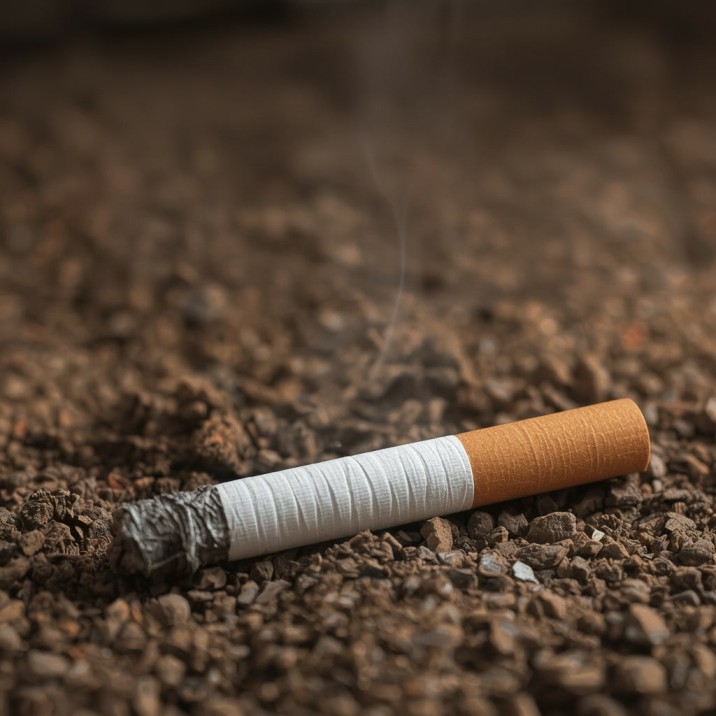
Looking for how to get rid of cigarette smell in a house? While you focus on the air, the issue lies on the surfaces. Tobacco smoke leaves behind thirdhand smoke. It contains nicotine, tar, and semi-volatile chemicals that stick to walls, ceilings, carpet, soft furnishings, and ductwork. They re-emit slowly into the air and the smell returns even after ventilation and surface cleaning, leaving behind a residual odour. Tobacco in Australia confirms that thirdhand smoke persists on indoor surfaces long after active smoking has ceased. This guide will help you understand the difference between treating only the symptoms and actually resolving the problem.
Why Cigarette Smell Comes Back — The Science of Thirdhand Smoke
The reason cigarette smell keeps returning is thirdhand smoke, semi-volatile tobacco chemicals that absorb into building materials and re-emit continuously. Thirdhand smoke house Australia research indicates that tobacco smoke contains semi-volatile chemicals such as nicotine, formaldehyde, and naphthalene. These compounds absorb into walls, ceilings, carpet, upholstery, timber, ductwork, and household dust, carpet, upholstery, timber, ductwork, and household dust absorb these compounds. Then they slowly re-emit into the air, which is why smell returns even after surface cleaning. The length of time smoke smell persists depends on how deeply the residue has penetrated, explore this further in our guide on how long smoke smell lasts in a house.
Air fresheners only cover the odour. They are not made for nicotine residue removal. Ventilation will also remove airborne smoke but not the embedded residue or a musty smell in your home. Australian data on thirdhand smoke and health effects, including the University of Technology Sydney research on the detection of nicotine residue in Australian environments, highlight that thirdhand smoke residues may remain on indoor surfaces.
Thirdhand smoke also poses health risks, particularly to children. Sydney’s warm, humid summer and autumn weather can accelerate off-gassing, causing odours to occur more rapidly.
What DIY Methods Actually Work (and What They Can’t Do)
DIY methods are effective for light to moderate contamination, but understanding what each method can and cannot do prevents wasted effort on severe cases. The important thing is to know what each method can and cannot do.
Open windows on opposite sides of the house and use fans blowing out. It allows cross-ventilation and helps you get rid of tobacco smell indoors when the outside air is cooler and drier. It can clean the air of smoke but cannot remove residue stuck on surfaces.
Use white vinegar or baking soda to wash curtains, bedding, and cushion covers in hot water. Sprinkle baking soda on carpet and soft furnishings and allow it to sit for 24 to 48 hours before vacuuming. The same process is also used to get rid of other types of odours, such as removing pet odours from carpet. White vinegar solution neutralises acid compounds from non-porous surfaces. It neutralises acid compounds but only removes surface-level odour, not what has absorbed deeper into the material. A HEPA air purifier will also remove fine smoke particles and volatile compounds that stay in the air. It can reduce the concentration but cannot remove embedded contamination in walls and carpets.
On the other hand, air fresheners and scented candles will simply cover up the odour. A standard vacuum can spread fine particles into the air. Steam cleaning upholstery will clean the surface but not the deep fibres or underlying foam. Nothing is captured when repainting without an odour-sealing primer like a shellac-based product like Zinsser BIN. Oily stains and odours will reappear. If smoke has penetrated walls, carpets, insulation or ductwork, household cleaning will not fully resolve the problem.
Cleaning Walls and Ceilings — The Most Overlooked Step
Sydney rental properties require more than just a fresh coat of paint. The first step in nicotine stain wall removal in Sydney is to remove the residue, instead of just covering it. Nicotine leaves behind yellow and brown stains on walls and ceilings, while odour will continue to reappear. For light and moderate contamination, follow these steps.
- Clean all walls and ceilings using a TSP cleaner or white vinegar solution. Work from top to bottom.
- Allow all surfaces to dry thoroughly.
- Before repainting, use a shellac-based odour-blocking primer like Zinsser BIN. Regular water-based primers won’t prevent stains or odours from bleeding through.
- Repaint surfaces after complete curing of the primer.
Safety Note: Use nitrile gloves and ensure proper airflow during use of TSP. This works well for low to moderate contamination. After years of intensive indoor smoking, the plasterboard can get contaminated. In such cases, the embedded residue will not be removed with cleaning. The affected material needs replacement.
What About HVAC and Ducted Air Conditioning?
Most people clean all the rooms but do not clean the air conditioning systems. Cigarette smell in ducted air conditioning in Sydney usually begins in the ductwork rather than the room. Nicotine residue adheres to the system’s duct and vents as the smoke travels. The residue then releases odours every time the system runs, even after complete cleaning. The odour may be strongest near air vents, or it may be shortly after the air conditioning is turned on.
It’s a very common problem as many Sydney houses and new apartments are built with ducted systems. Standard cleaning without treating ductwork will not fully resolve the problem. You must schedule a professional duct cleaning before or along with odour decontamination.
When DIY Is Not Enough — Signs You Need Professional Treatment
DIY cleaning has limitations. If a smell keeps returning, professional cigarette smell removal in Sydney is the only solution. If the smell returns within weeks of thorough cleaning, repeated DIY attempts are unlikely to resolve it, the contamination has embedded deeper than surface methods can reach.
You need professional odour decontamination services smell returns within weeks of thorough cleaning, yellow or brown nicotine staining visible, smell detectable in every room, failed rental inspection, property being prepared for sale. When smoking continues for over 12 months, you may notice yellow or brown nicotine stains visible on walls and ceilings. Moreover, your rental inspection may fail due to a smoke smell in every room when you want to sell your property, and the first-time visitor detects the smell.
Professional techniques can access areas that standard home cleaning cannot. Thermal fogging in Sydney also traces the smoke’s travel pathways. They can enter wall cavities, ductwork, and soft furnishings. Ozone treatment cigarette smell services utilise O3 to react and neutralise the compounds that cause the odour at a molecular level. In addition, some experts use hydroxyl generators that are safe for use in occupied buildings. These methods are aimed at removing the embedded residue that surface cleaning and ventilation do not reach.
Sydney Rental Properties — Special Considerations
Cigarette smell rental property Sydney disputes often involve bond claims. NSW tenancy law on bond deductions allows landlords to claim a reasonable cost for professional cleaning as a result of the tenant smoking indoors in breach of the tenancy agreement. But it’s only possible if they document the damage correctly. You need a professional assessment report, clear before-and-after photos, and all the receipts. If the matter goes to NCAT, an ISO 9001 documented report from a certified decontamination company can be very helpful. Standard end-of-lease tasks cannot remove thirdhand smoke, unlike cleaning up a musty smell in your home or removing pet odour from the carpet. You usually need professional cleanup for this type of contamination.
Frequently Asked Questions
Q1: Why does cigarette smell keep coming back even after cleaning?
The cigarette odour persists because thirdhand smoke stays in the building products. It includes nicotine, formaldehyde, and naphthalene, which are semi-volatile chemicals that absorb into walls, ceilings, carpet materials, upholstery, and ductwork. Surface cleaning will reduce surface residue but not the residue that has been absorbed. Also, ventilation and air fresheners will only provide a short-term release because the embedded residue will continue to re-emit into the air.
Q2: Does painting over nicotine stains remove the cigarette smell?
No, without the right primer. Standard water-based paint does not prevent nicotine stains or odours from bleeding through. Use an odour-sealing primer such as a shellac-based product like Zinsser BIN before repainting. Years of excessive indoor smoking may have affected the plasterboard itself. As a result, sealing and repainting the wall may not help. For such cases, replacement might be necessary.
Q3: Can you get rid of cigarette smell in a house before selling or renting it out?
Yes, most of the time, but not always. But the best solution depends on the level of contamination. If light contamination is the issue, first ensure the area is clean and soft furnishings are washed. Then paint the walls with an odour-blocking primer and repaint. However, for heavy contamination, professional thermal fogging or ozone treatment is typically needed. We also recommend a professional assessment first to avoid wasting time and money on ineffective DIY methods.
Q4: How long does it take to remove cigarette smell from a house professionally?
Most residential cigarette smell decontamination is completed within 1–3 days to remove cigarette smell from a home. It depends on the size of the home, the extent of the damage, and the smoke removal method used. Thermal fogging can be completed within hours. An ozone treatment requires a property to be unoccupied during the treatment. After the initial assessment, we provide a clear timeline and scope of works. Properties with years of heavy smoking may need follow-up treatment.
Q5: Can a landlord claim cigarette smell removal from the bond in NSW?
Yes. If the tenancy agreement prohibits indoor smoking, the landlord can recover reasonable professional decontamination costs from the bond if the tenant has breached that agreement. The landlord should keep before-and-after photos, an assessment report, and all receipts. If the issue escalates to the NSW Civil and Administrative Tribunal, an ISO 9001-certified report from a certified company can be a valuable piece of evidence.
Q6: How do you permanently get rid of cigarette smell in a house?
Removing the source of cigarette smell is the best way to remove the smell permanently, not just the air itself. Thirdhand smoke residue gets stuck on walls, ceilings, carpets, upholstery, and ductwork. Cross-ventilation is a good DIY solution using fans that face outside the building. Washing soft furnishings in hot water with white vinegar, cleaning walls and ceilings with white vinegar, or using a shellac-based odour primer or TSP before repainting are also effective DIY solutions. An air purifier is another effective DIY solution. For extensive contamination after prolonged indoor smoking, professional thermal fogging or ozone treatment is usually required because these methods reach areas that household cleaning cannot.
Q7: What is thirdhand smoke and why does it make cigarette smell so hard to remove?
Thirdhand smoke is the residue of cigarette smoke that remains after smoke has cleared from the air. Semi-volatile chemicals such as nicotine, formaldehyde, and naphthalene will absorb into walls, ceilings, carpet, upholstery, furniture, and ductwork. They gradually re-emit into the air and persist for months or years, even after cleaning and ventilation, which is exactly why cigarette smell keeps returning. A 2025 University of Technology Sydney peer-reviewed study specifically investigated nicotine residue detection in Australian environments, proving that thirdhand smoke residue can persist on indoor surfaces long after smoking.
Q8: Does ozone treatment remove cigarette smell permanently?
Yes, ozone treatment can permanently remove cigarette smell and embedded thirdhand smoke. But only with the help of trained professionals. The composition of O₃ reacts at a molecular level with the odour-causing compounds, such as nicotine residue. Excessive ozone levels are dangerous. That’s why the property should be kept empty while under treatment. Once the ozone has been removed and the property has been ventilated, it is safe to re-enter. Surface cleaning and duct decontamination may also be necessary to achieve a complete solution in the event of severe contamination.
Q9: Can a Sydney landlord charge the bond for cigarette smell removal?
Yes, in NSW. If the landlord in NSW has had a tenancy agreement that restricts the tenant from smoking indoors. In case of breach of that agreement, the landlord will receive a reasonable cost of professional odour decontamination from the bond. For successful claims, the landlord should keep before and after photos, a professional assessment report from a certified odour decontamination company, and all the receipts. An ISO 9001 documented assessment report will also make the claim easier by acting as strong evidence if the case goes to the NSW Civil and Administrative Tribunal (NCAT)
Q10: What professional methods are used to remove cigarette smell from a house in Sydney?
Usually, when it comes to professional cigarette smell removal in Sydney, technicians use three main methods depending on severity. Thermal fogging emits or deodorising mist that absorbs into wall cavities, ductwork, and soft furnishings in the same way cigarette smoke does. Ozone treatment is molecular-level odour compound neutralisation that requires vacating of the property. Hydroxy generators also remove odours and can be used in areas with people present. In severe contamination cases, a combination of surface cleaning, duct decontamination and one or more of these treatments may be necessary.
If cigarette smell has returned despite thorough cleaning, the contamination is embedded deeper than surface methods can reach. Candid Cleaners professional odour decontamination Sydney team uses thermal fogging and hydroxyl treatment to neutralise nicotine residue permanently. [Get a free quote →]
