
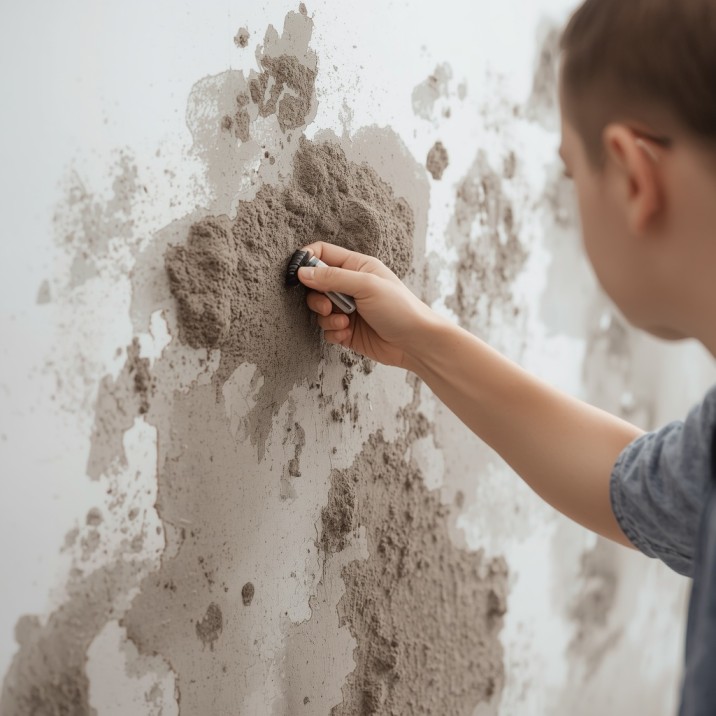
Mould treatment isn’t one-size-fits-all. There are three main ways, including surface treatment, air treatments such as fogging, and full structural remediation. Each addresses a different level of contamination. You can treat light growth on walls or tiles with sprays, whereas airborne spores need a wider reach. But if mould has extended far into walls, ceilings, or insulation, expert cleaning is necessary. Therefore, the important thing is to know how far the problem has extended. Using the right method from the start can save you time, money, and repeated growth in humid Sydney homes, where mould can return rapidly.
Surface Treatments — DIY Mould Sprays and Washes
For minor issues, many people prefer mould removal spray Australia, which is widely available in supermarkets. This can be useful for visible mould growth, but they only treat the mould at the surface.
Bleach-based sprays
Selleys and White King sprays quickly remove stains on hard, nonporous surfaces such as tiles, glass, and sealed walls. They are effective against surface mould. But they are unable to penetrate porous materials such as raw plasterboard or timber, and roots are often left behind and reappear.
Vinegar
Vinegar is slower-acting but penetrates slightly deeper into porous materials. It works best in places such as grout or unsealed surfaces. However, it does not completely remove embedded mould or stop it from regrowing if there is any moisture.
Hydrogen peroxide
This is a minor one that is usually applied to soft furnishing fabric or surfaces that are delicate. Hydrogen peroxide is a gentler alternative suitable for soft furnishings, fabrics, and delicate surfaces where bleach would cause damage. It is effective on light surface mould but does not penetrate deep contamination.
Tea tree oil
This is a mild antifungal, which is the natural choice. It may help light mould control and odour. It is weaker than the other, and thus it will not affect more extensive patches than small ones.
So, the final verdict is, if the mould is small and isolated to a particular area, like tile or painted walls, then it’s best to rely on mould spray effectiveness. But remember, they do not correct the moisture or deeper contamination source.
Fogging Treatments — Thermal and Cold Fogging for Mould
Fogging is used to treat airborne mould spores and hard-to-reach areas after the mould removal from visible surfaces. Thermal fogging mould Sydney services involve applying a mould-inhibiting chemical in the form of a fine mist, which enters the air along the roots of mould spores and into wall cavities, ceiling voids, and ductwork. Similarly, cold fogging is accomplished through a mechanical sprayer, which creates an ultra-fine mist and dispenses it on surfaces and into the air. Both approaches will decrease the persistence of spores and also help to control odour alongside services like odour decontamination.
Fogging mould treatment in Sydney is usually used as a secondary process to clean the air and concealed areas after surface mould removal. It is useful for enclosed spaces, such as rooms where spores can circulate, and in HVAC systems. But it will not remove visible mould growth or even structural damage. The use of thermal fogging in Sydney will not resolve the problem if the mould has penetrated porous materials. Instead, it should be used as a part of a remediation plan, not as a standalone solution.
Hydroxyl and Ozone Treatments for Mould
Hydroxyl generators
A hydroxyl generator mould treatment system incorporates UV light to generate reactive molecules that destroy particles that are floating in the air, such as mould spores. These units can operate in occupied areas, making them appropriate for the remediation process in homes where evacuation is not possible. The hydroxyl generator in Sydney also has to improve the air quality over time, but they work slowly.
Ozone treatment
Ozone gas is released during the ozone mould treatment process to oxidise and destroy mould spores in the air. It is very effective against residual spore counts after cleaning, but must be evacuated during use because of safety issues. Ventilation is also required before re-entry.
Both methods focus on air quality. They help to lower the level of mould in the air, but don’t get rid of visible mould growth or stop mould contamination in materials. Thus, they are best used as a part of a complete remediation process, not on their own.
Professional Mould Remediation — What the IICRC S520 Standard Includes
Professional mould remediation experts use a systematic process in line with the IICRC S520 mould remediation guidelines. It focuses on eliminating mould at its source instead of just treating the symptoms.
Moisture assessment
Technicians conduct IICRC-certified mould inspection in Sydney. It helps to determine the source of moisture using thermal imaging and moisture meters. This step is essential because mould will keep coming back if moisture issues remain unresolved.
Containment with negative air pressure
They also close affected areas to prevent spores from reaching clean areas. Experts use a negative air machine with a HEPA filter to trap particles in the air and regulate the airflow at the same time.
Physical removal of contaminated materials
For deep contamination, the team removes porous materials like plasterboard, insulation, and carpets. This step removes mould within the structure rather than leaving it behind.
Antimicrobial treatment of structural elements
They also clean timber framing and other exposed surfaces to treat and destroy spores and minimise the risk of re-infestation.
Clearance testing with an independent IEP
An independent environmental professional conducts clearance testing if needed. They then issue a written report confirming the area is safe and that mould remediation is complete.
Overall, mould remediation is the only effective black mould treatment option, especially for mould after water damage, mould in the wall cavities, and patches larger than one square metre.
Which Mould Treatment is Right for Your Situation?
It’s important to determine the correct method based on the extent of the problem.
- Working on a single tile grout joint → you can typically do the job with a home spray. It’s a non-porous surface, and the mould growth is limited to the surface and has not spread deep.
- For a small patch on a bathroom ceiling → go with a surface cleaning method and boost ventilation, such as improving the bathroom exhaust fan. Excess moisture and trapped humidity are usually the cause of mould. Removing visible mould from the surface and improving ventilation helps to lower moisture and humidity levels and prevent regrowth.
- For a persistent odour → a professional inspection is necessary to identify hidden mould. As mould growth goes beneath the surface inside wall cavities, or under flooring, where surface cleaning cannot reach.
More serious cases need a different response, and that’s why mould remediation costs in Sydney may also vary. Like the following:
- Mould after water damage in Sydney → requires complete removal instead of surface cleaning. Moisture soaks into porous materials like carpets, drywall, and timber, allowing regrowth, and surface cleaning cannot remove the hidden contamination.
- Mould in the wall cavity in Sydney → needs professional removal as it cannot be reached adequately otherwise. Professionals use specialised equipment to identify and remove the moisture source and prevent spreading, whereas surface cleaning can’t do the job.
- Repeated growth → It signals that the moisture problem under the surface has not been fixed. Therefore, you need expert help instead of a DIY solution.
- Mould Patch >1m² → These larger infestations can spread the spores more easily and impact indoor air quality. Thus, you need professional help to handle it carefully.
So, mould treatment in Sydney doesn’t necessarily depend on how the mould looks. But it depends on how serious the problem is for most homes.
Frequently Asked Questions
Q1: Can fogging get rid of mould permanently?
Fogging can reduce airborne mould spores and get into areas that surface cleaning cannot access. However, it will not remove any visible growth or fix any structural contamination. You can use it alongside physical cleaning for the best results. Overall, fogging should always be a part of a wider treatment approach, as moisture issues may continue to cause more to reappear.
Q2: What is the difference between mould removal and mould remediation?
Typically, mould removal is the term to use to describe cleaning visible mould from surfaces. Mould remediation is a complete process that follows IICRC standards, including identification of the moisture source, removal of contaminated materials, structural treatment, and testing for safety. Hence, remediation is not about what you see, but it is about what causes mould growth.
Q3: Is DIY mould spray effective for bathroom mould?
The simple sprays will be effective on small surface mould, such as on tiles and painted walls. You can only use them for light isolated patches. But they don’t patch mould within grout, behind walls, or in places with regular moisture problems. If mould keeps coming back, improving the ventilation and professional assessment for hidden moisture sources becomes necessary.
Q4: How much does professional mould remediation cost in Sydney?
The cost depends on the extent of mould, the type of materials affected, and the scope of work required. Surface jobs can cost several $100, and structural jobs will be more expensive. We always recommend having an inspection first to understand the scope of work and get a free upfront quote. We provide free site inspections and itemised quotes before starting any work. Call 1800 974 994 or fill out our online form.
Q5: When is ozone treatment used for mould?
Physical mould removal after ozone treatment helps to kill mould spores in the air and to neutralize odours. Technicians carry it out in empty properties because ozone is not safe to breathe. It is the last stage of the mould remediation process. It cannot reduce mould growth or act as a standalone solution for removing the moisture source.
Q6: What mould treatment method is most effective for Sydney homes?
The most effective way to deal with mould is to determine the severity of the problem. You can clean surface mould with a DIY bleach solution at a 1:10 ratio, but mould behind walls or in porous materials requires professional remediation following IICRC S520 standards. Moreover, fogging and hydroxyl treatment only reduce airborne spores but can’t replace the physical process. For the Sydney humid environment, always focus on the moisture source first, as mould will come back rapidly after treatment.
Q7: What does thermal fogging do for mould treatment?
Thermal fogging involves the application of a very fine biocide mist that travels to air pathways, similar to how spores travel, and reaches cavities, ducts, and hidden areas. It is also helpful to lower the score levels in the air after cleaning. But it cannot fix source contamination and mould growth. It is only effective after physical removal and does not get rid of mould growth or repair damaged material.
Q8: Is professional mould remediation worth it compared to DIY treatment in Sydney?
Yes, professional IICRC S520 mould remediation is more effective than DIY solutions. DIY techniques can only clean what you can see, but leave contamination behind. However, professional remediation involves the detection of water contaminants, removal of contaminated materials, and testing to prove the area safe. Also, it offers more long-term solutions for recurring mould or water damage issues in Sydney.
Q9: Can mould treatment sprays sold at Bunnings effectively remove black mould?
Commercial mould sprays will only remove visible black mould growth on tiles or other hard surfaces, not mould between the walls or in porous materials. However, they don’t address the moisture issue, which is the cause of mould growth. In case of black mould, we always recommend professional assessment before treatment to prevent the spread of spores.
Q10: How long does professional mould treatment last in a Sydney home?
Professional mould remediation delivers long-term results when done correctly. We also confirm results through clearance checks before signing off. But it is still possible for mould to reappear if there are new leaks or if there is insufficient ventilation. In Sydney, the regular check-ups of wet zones like bathrooms, kitchens, and laundry spaces also help to prevent future problems.
Conclusion
Mould problems may vary more than you might think. Thus, the right treatment is very important. Surface sprays are effective for small visible spots, and fogging and air treatment are effective against spores remaining in the air. However, if mould persists beyond this level or reappears, complete mould remediation is the only solution that will treat the root cause. But it’s important to match the solution to the severity instead of what’s visible. Early action can avoid further damage, health issues, and recurrence. But when you are unsure, it is better to evaluate the situation first than to take quick fixes, which may address the symptoms but not the problem itself.
If you’re dealing with persistent or hidden mould, it’s important to come up with the right solution at the right time. Get a free estimate for inspection services to understand the scope of the problem and plan the professional mould remediation like Candid Cleaners in Sydney. Learn more about our complete mould remediation process.
