
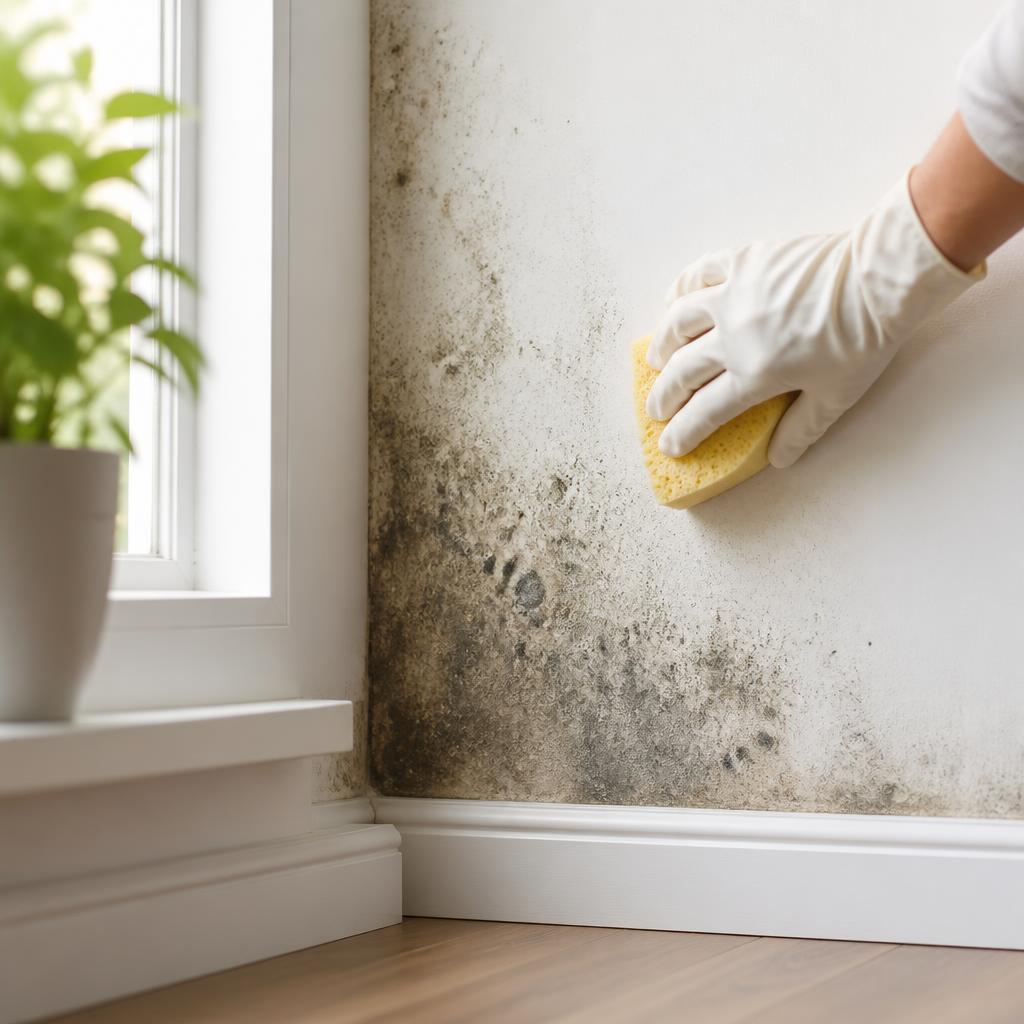
Mould on the walls may cause allergies, worsen asthma, and impact the overall indoor air quality. How to remove mould from walls depends on the extent of its spreading. You can handle small spots on painted walls using simple domestic techniques and basic safety procedures. However, when mould continues to appear on a large scale or bleeds into plaster, this is an indication of a more serious moisture issue that requires professional help. So, in this guide, you’ll learn what you can handle yourself and how to do it safely. Similarly, when you need to call a professional to remove mould on walls in Sydney, before the problem becomes more complicated.
Is It Safe to Remove Mould from Walls Yourself?
In most cases, yes, but only when the affected area is small and contained. You can handle mould at home, whose patch size is less than 1 square meter, with minimal precautions. But mould removal safety DIY practices are important, such as the use of gloves, a mask, and proper ventilation. However, even a minor response may produce spores in the air when disturbed. These spores bear mycotoxins, which cause respiratory irritation, particularly in enclosed spaces. They might seem harmless, but they still need care so as not to cause contamination to other places.
In contrast, moulds bigger than 1 square meter are a more serious problem. At this point, mould usually goes further into the walls due to continuous moisture issues. These mould spores’ health risks include asthma, allergies, weak immune system. Households that have young children or elderly people should not engage in DIY removal at all. Moreover, the AS/NZS guidance states that widespread or repeated mould growth requires a professional approach to ensure safe removal and prevent long-term damage.
Rule of thumb: <1m² = maybe DIY; >1m² = professional
What You Need Before You Start — Equipment and Products
The first thing you need to do before commencing is to prepare the appropriate equipment and select reliable and efficient cleaners. Using the correct mould removal products in Australia helps you get the best results, along with protection.
PPE list:
Use a P2 respirator, not a simple dust mask, to prevent spores from being inhaled. Wear nitrile gloves to cover your skin as well as eye protection. It is also recommended to use disposable overalls to avoid taking along spores to other areas of the home.
Products:
In case of a non-porous surface, use a diluted bleach solution 1:10 is effective. White vinegar is also a less dangerous substance to apply to porous material since it can reach a deeper level. You may use tea tree oil, which is a natural substitute for mould treatment products that have antifungal effects.
What NOT to use:
Do not use a dry brush, as it spreads spores into the air. Instead, use the HEPA vacuum for mould before and after the cleaning process to confine contamination.
Step-by-Step: How to Remove Mould from Walls
Follow these steps carefully to limit exposure and prevent the spread of spores. The remove mould from wall steps focuses on control and safe cleaning with reliable drying to minimise the possibilities of regrowth.
1. Contain the area
Close doors to prevent spores from entering other rooms. Keep the windows open to enhance ventilation. Also, wrap the surrounding pieces of furniture and floors with plastic coverings. Switch off air conditioning or fans that recirculate air within the structure to prevent additional contamination.
2. HEPA vacuum loose spores
Before applying any liquid treatment, use a HEPA vacuum to remove any loose mould spores. This will decrease the level of airborne particles. Sweep gradually across the affected area to remove as much contamination as possible without disturbing it.
3. Apply treatment
Use an appropriate cleaning solution depending on the surface. Apply diluted bleach on painted or tiled walls. Do not use bleach on unfinished timber or raw plasterboard. As a result, it can damage the material and not penetrate the mould hidden beneath the surface.
4. Scrub with disposable tools
Wipe the area with a disposable cloth or brush. Move in one direction instead of circular movements to avoid further spore spread. Use light pressure and do not over-scrub the wall, as it can cause damage or push the mould deeper.
5. Dry the area completely
To avoid mould reappearance, dry the clean area thoroughly, particularly for bathroom mould removal. You can also use a dehumidifier or a fan facing outside the place through a window. Maintain a consistent airflow until every drop of moisture has gone, as damp conditions allow mould growth more rapidly.
How to Stop Mould Coming Back on Walls
Root cause: moisture
Mould will continue to appear as long as there is a moisture source. You must repair leaks in roofs, pipes, or walls as quickly as possible. Otherwise, cleaning is just a temporary solution. Areas of dampness, condensation, or concealed water damage all provide the environment that mould needs to grow.
Ventilation and control
Proper ventilation also ensures that the space is dry. Install and use exhaust fans in bathrooms and kitchens primarily after taking a shower or cooking. You can use a dehumidifier to decrease the level of moisture in humid rooms. Anti-mould paint creates a surface barrier that inhibits future mould growth on treated walls.
Sydney climate factors
Sydney home spaces face a unique local challenge due to humidity and coastal areas. The eastern suburbs and northern beaches are more likely to remain wet than inland areas. Consequently, it needs high maintenance of consistent ventilation and moisture to prevent mould on walls in Sydney all year round.
When DIY Mould Removal Isn’t Enough — Signs You Need a Professional
In some cases, surface cleaning just conceals the problem rather than resolving it. This is where you need professional mould removal in Sydney, particularly when growth goes beyond the surface and constantly returns after treatment.
Mould behind walls or under floors
The mould inside the wall cavities, ceilings, and under the floor cannot be removed through surface cleaning. However, water damage restoration is important because when moisture stays inside the building materials, it leads to mould growth.
Mould larger than 1m²
Any patch of mould bigger than 1m² is a severe infection. At this stage, spores go beyond the surface, and DIY cleaning cannot control contamination or the source of moisture.
Black mould (Stachybotrys)
Stachybotrys black mould removal carries health risks, and that’s why it requires IICRC S520 certified mould remediation service. It releases unhealthy spores, particularly when disturbed, and is never recommended to handle as a routine household cleaning job.
Mould after water damage or flooding
When mould grows after water damage like leaks, burst pipes, or flooding, it frequently spreads deep into materials. A persistent musty odour contamination without visible mould is a powerful indicator of hidden growth that requires expert handling, not DIY cleaning.
What Happens During Professional Mould Remediation?
Professional mould removal has a well-defined process that focuses on reducing contamination safely and preventing its spread. Each step of IICRC S520 mould remediation in Sydney practices is focused on contaminant, air control, and verification to ensure that the space is safe again.
IICRC S520 protocol
The technicians follow IICRC S520 standards to evaluate the contamination and strategize removal to ensure that affected materials are safely handled.
Containment
They close the affected area with plastic barriers to prevent the spores from entering clean spaces.
HEPA negative air pressure
Special machines create negative air pressure with HEPA filtration to reduce airborne spores and avoid leakage.
Antimicrobial treatment
Technicians apply antimicrobial solutions to the surfaces to kill the mould remaining at the source.
Clearance testing
After cleaning, air and surface tests also prove that the area is completely safe. Professional technicians provide written clearance reports that are necessary for insurance claims and real estate deals.
Frequently Asked Questions
Q1: Can I remove black mould from walls myself?
You can remove small patches of mould from the surface with diluted bleach or vinegar because it’s safe. But you cannot remove black mould (Stachybotrys) with DIY solutions. Removing black mould from walls may release mycotoxins that can impact health. Thus, you should not do DIY for black mould removal. Also, when affected areas are bigger than one square meter, it is better to seek expert help instead of DIY.
Q2: What kills mould on walls permanently?
Nothing kills mould permanently while the moisture source remains untreated. You must repair any leaks, condensation, or poor airflow before expecting lasting results from any product. Once it’s complete, cleaning and anti-mould paint can be used to reduce regrowth. Proper ventilation is also important for long-term mould prevention in homes in Sydney.
Q3: How long does it take for mould to grow on walls?
How fast mould grows depends on moisture exposure. Typically, it may take 24 to 48 hours after moisture exposure before mould can start forming. You can notice visible growth in one to two weeks. However, growth may occur even more rapidly in humid areas like the eastern suburbs and northern beaches than in inland areas. Hence, it’s important to act within 24 hours in case of water damage.
Q4: Is bleach effective for removing mould from walls?
When diluted appropriately, bleach mould removal works on non-porous surfaces such as tiles and painted walls. But it fails to infiltrate porous substances like raw plasterboard or timber. In such situations, mould can recur unless the cause of the underlying moisture is treated through professional treatment.
Q5: When should I call a professional for mould removal in Sydney?
You should call a professional when the mould is bigger than one square meter and is concealed behind walls or floors. Also, when you find a musty and persistent smell but no visible growth, it is also a sign of greater contamination that requires professional mould removal in Sydney.
Q6: What is the safest way to remove mould from walls in Sydney homes?
The safest method of reducing mould will depend on the extent of growth. To protect the small areas less than one square meter, you should wear the P2 respirator, gloves, and eye protection. Firstly, clean using a HEPA vacuum, then wipe down using diluted bleach on non-porous surfaces or using white vinegar on porous surfaces and dry completely. However, in case of larger or black mould, you must contact an IICRC-certified S520 professional to treat the root cause rather than surface cleaning.
Q7: What causes mould to keep coming back on walls even after cleaning?
Mould continuously reoccurs when you do not treat the source of moisture. It is usually in Sydney homes due to roof leakage, plumbing problems, lack of ventilation in the bathroom, or condensation during the winter months. Surface cleaning will only remove the temporary surface growth. To prevent mould long-term regrowth, you must correct the water problem, ensure proper airflow, and treat affected areas professionally.
Q8: Is black mould on walls dangerous to health in Australia?
Yes, the black mould (Stachybotrys) may be dangerous. It can release mycotoxins, which trigger respiratory problems, headaches, eye irritation, and more serious problems, particularly for sensitive individuals. While all mould problems require a quick fix, black mould is not recommended to be treated without HEPA filtration and professional care. In Australia, health guidance recommends that when the growth of black mould is significant, you should go for professional help to remove it safely with effective treatments.
Q9: How do professional mould remediators in Sydney remove mould from walls?
Professionals follow IICRC S520 standards for mould removal in Sydney. They established a negative air pressure contaminant HEPA vacuum in all contaminated areas and used antimicrobial treatments. They also remove damaged materials safely under ISO 14001 protocols. After cleaning, they also conduct clearance testing to ensure everything is safe, along with a written report for property records and insurance claims.
Q10: How much does professional mould removal cost in Sydney?
The professional mould removal cost in Sydney will differ according to the size of the affected area, material type, and the extent of spore spread. Minor jobs on the surface cost a few $100, and this range may go above for larger structural problems. Also, you can expect a first site inspection, as most professionals, like Candid Cleaners, provide a free site assessment before giving you a clear quote.
Conclusion
Overall, mould might seem like a surface problem, but it’s not a reality. You can handle small mould patches at home with simple DIY practices. But for mould growth beneath the surface, behind walls, and black mould growth, you need a professional IICRC-certified mould remediation team to treat root causes and long-term prevention. Hence, act promptly, control moisture, and know DIY limits to help you prevent health hazards and get safe mould removal in Sydney.
If you have mould on your walls and it keeps coming back, or you have found mould spreading beyond a small area. Our IICRC S520 certified mould remediation team can inspect and treat using professional mould remediation Sydney methods. Get a free quote →
