
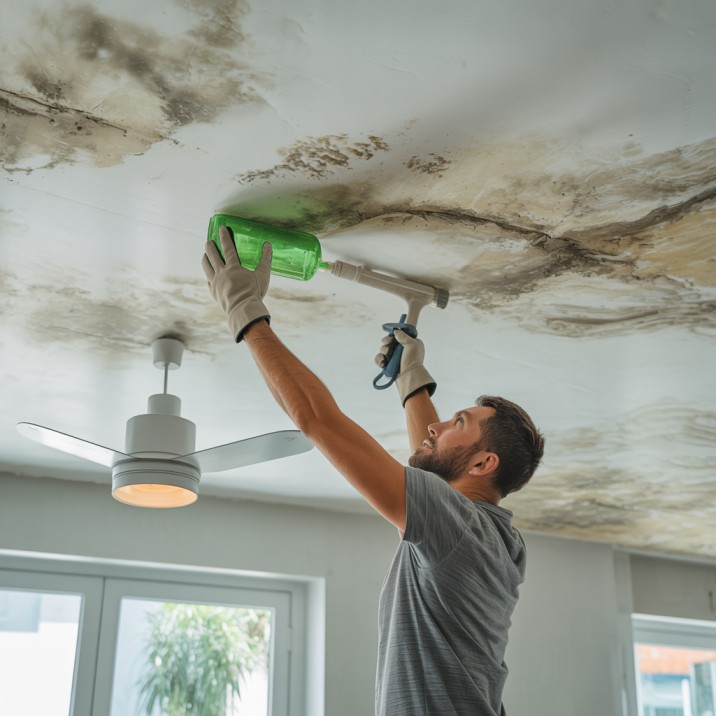
Want to remove mould from ceiling? But don’t know how? Let our quick guide help you. Mould looks like a minor surface issue, but it can cause hidden problems beneath your home’s structure in Sydney. Sydney’s humid climate and warm conditions make ceilings an easy target for mould growth, especially in areas with poor ventilation.
If you ignore it, it not only causes surface damage but also health problems and lowers the quality of indoor air. But this guide gives you clear and practical ways to remove mould from a ceiling safely and effectively. We also guide you on simple ways to prevent mould from coming back and when professional help is a smarter option.
Why Mould Grows on the Ceilings in Sydney Homes?
Mould needs moisture, a warm environment, and organic materials to grow, which Sydney’s home structures often provide. The high humidity levels also became the cause of mould growth. The average humidity in Australia is 30%, but in summer it goes to 80%, especially in the coastal areas. As a result, rooms with poor ventilation and humid weather conditions create a perfect ground for mould. Poor airflow is another critical cause of mould growth. Areas prone to mould include kitchens, bathrooms, laundry spaces, and bedrooms. These areas trap moisture due to poor ventilation, which causes recurring mould problems.
Moreover, roof and wall leakage allows water moisture to accumulate in ceilings, which leads to damp patches that cause mould. Inadequate insulation and blocked or damaged gutters also cause moisture to sweep into roof spaces, leading to damp and mould problems.
Signs You Need to Remove Mould From Ceiling
Visible mould spores and stains
One of the most obvious signs of the beginning of mould is mould spores and stains. They can appear as black, green, or brown spots and are occasionally fuzzy. It starts as a small spot and may grow faster on ceilings and even the nearby walls when left untreated. Also, discoloration that continues to grow or recur after cleaning is another indicator that there is greater mould growth.
Musty smells and air quality issues
Even when you can’t see the hidden mould, a persistent musty or damp smell often indicates the presence of hidden mould. The smell may influence your indoor air quality and make your living spaces uncomfortable. In the long term, poor air quality caused by mould spores also results in breathing problems, irritation, and general discomfort, particularly in poorly ventilated rooms.
When walls and ceilings are at risk
Mould does not just remain in a single location. When your ceiling is involved, nearby walls and surfaces are also vulnerable, particularly in high-moisture areas. Bubbles, peeling paint, or mushy spots are also signs that moisture has already spread. Early action will prevent additional harm to your ceilings and walls and lower the chances of serious structural problems.
Tools and Supplies to Remove Mould From Ceiling
Essential items
To begin with, a couple of simple items will help you to make the job more secure and efficient. The spray bottle will help in applying your solution evenly, and microfibre cloths are a great choice to wipe without leaving a residue. The correct tools also lower the possibility of disturbing the mould spores, which may spread through the air during cleaning.
Safe cleaning solutions
It’s important to select a safe and appropriate cleaning solution. Hydrogen peroxide is popular for breaking down mould and disinfecting surfaces. Baking soda is also widely used in light cases to eliminate odours. There are options that are applicable to most homes, particularly in spaces that are prone to moisture, where mould is likely to recur unless properly treated.
Preparing your cleaning solution and squeeze method
Before applying the chosen solution, combine the solution and pour it into a spray bottle so that it is easy to use. Spray a little water over the affected area, but do not soak the part, as it will make the mould tight to the wall. Therefore, ensuring that the solution remains in contact with the world as long as possible is important. Wipe the surface with a cloth, pushing with even pressure using a squeeze movement to lift residue without damaging the ceiling.
Step-by-Step Guide to Remove Mould From Ceiling
Preparing the area safely
The first step is to prepare the space to prevent the spread of mould or exposing yourself to it. Ventilate the room using open windows and use simple protective gear such as masks and gloves. Also, cover the surrounding furniture for flooring when necessary. Consequently, with proper preparation, mould removal will be a safer process and will contain the affected area before you start cleaning.
Applying solution to clean mould
Spray the cleaning solution of your choice on the affected area of the ceiling. Ensure that the surface is not saturated with the solution, and allow a few minutes to help the solution break down the mould. This step is also used to loosen the growth so that it can be removed more efficiently without damaging the surface.
Wiping and drying with cloths
Wipe the area with the clean cloths, preferably microfibre. Do not scrub hard, as the particles may spread or destroy the ceiling. After removing the mould, use a dry cloth to wipe out any residue or moisture. To prevent mould from coming back, it is important to keep the surface dry.
Final Check to ensure mould removal is complete
Once clean, you must inspect the area carefully to see whether there are still spots or traces of regrowth. If necessary, repeat the process until the surface is completely clean. Additionally, the low humidity and good airflow will help to keep the space mould-free and minimise the possibility of future growth.
Natural and Chemical Ways to Kill Mould
Using hydrogen peroxide effectively
Hydrogen peroxide is a good alternative to get rid of mould on the ceiling. Apply a low-concentration solution and spray it directly on the affected area. Allow it to rest for a few minutes so that it dissolves the mould, and then dry it with a clean cloth. It is also useful in disinfecting the surface and minimising the possibility of mould returning.
Baking soda for mild mould issues
Baking soda is only effective in small patches and in the initial stages of mould. Combine it with water to form an easy solution and spray it on the surface. It helps in removing light stains of mould and counterbalances odours without being abusive to the surface. Overall, it makes it a good option for routine maintenance and minor cleaning.
When stronger treatments are needed
When mould continues to recur or to occupy a greater space, more powerful treatments might be needed. Mould chemical cleaners may give better results, particularly in wet areas. However, for more extreme situations, it is more efficient to call the professional who helps in removing mould from the ceiling and cures the underlying cause to avoid further damage.
How to Prevent Mould From Coming Back
Controlling humidity levels in Sydney homes
Keeping the indoor humidity level low is one of the best ways to prevent mould from coming back. Install exhaust fans, open windows where possible, and use a dehumidifier in the rooms that are prone to moisture buildup. Such simple things as drying wet surfaces and not letting steam accumulate can also be significant in the long run.
Improving ventilation in areas prone to mould
Lack of airflow or excess moisture lingering around will provide the optimal mould environment. Focus on enhancing the ventilation in the bathrooms, kitchens, and laundry spaces where moisture is likely to spread. Furthermore, the occasional use of exhaust fans and the fresh air will keep such spaces dry and less prone to the development of mould again.
Keeping ceilings and walls mould-free
Light cleaning and frequent checkups are also useful in ensuring that ceilings and walls are in good condition. Wipe the condensation whenever you notice it, and repair leaks immediately after they occur. All in all, remaining consistent with these little steps will decrease the moisture buildup and keep the home mould-free.
When to Call Candid Cleaners To Remove Mould From Ceilings Professionally
When the mould continues to recur or spread over a large area, it’s a sign to call a professional like Candid Cleaners. We offer IICRC S520 certified mould remediation following the recognised industry standards for safe and effective treatment. Our team identifies the source-affected zones and applies specialised HEPA filtration and treatments to minimise contamination. It not only helps in restoring cleaner indoor air but also reduces the chances of mould reappearing on both residential and commercial premises.
Frequently Asked Questions
Q1: How to remove mould from the bathroom ceiling?
Start by ventilating the room, then spray a mild solution like hydrogen peroxide or diluted vinegar on the mould. Let it rest for a few seconds, then gently wipe with a microfibre cloth and dry the surface fully to stop moisture buildup.
Q2: What is the best way to remove mould from ceiling?
One of the best ways to remove mould from the ceiling is to treat both the surface and the source of moisture. Apply a mould cleaning solution evenly all over the ceiling, leave it to dry, and then wipe it down. Also, you need to make sure that the ceiling is completely dry and enhance the ventilation to avoid regrowth.
Q3: How to remove black mould from the ceiling?
Put on protective clothes and use a more powerful cleaning agent like hydrogen peroxide or a mould-specific cleaner. Spray the affected area and allow sufficient time to penetrate, and then wipe. Repeat the process if necessary and address the moisture problem underlying it to prevent reappearance.
Q4: How to remove mould from bedroom ceiling?
First, enhance the ventilation by opening windows. Spray a safe cleaning solution over the mould and leave it to break down, then wipe with a clean cloth. It is also important to keep the level of humidity in the bedroom low to prevent the development of mould in the future.
Q5: What kills mould permanently on a ceiling?
There is nothing that kills mould permanently without getting rid of moisture. Powerful cleaners such as hydrogen peroxide are capable of reducing surface growth. However, long-term management relies on fixing leaks, reducing humidity, and improving ventilation to prevent recurrence of mould.
Conclusion
Lastly, mould on ceilings is not only a surface problem, but it is also an indication of excess moisture and inadequate ventilation. Keeping it clean will help in the improvement of indoor air quality and will also reduce the health risk. However, long-term effects can only be achieved with the help of identifying and fixing the root cause. Moreover, regular checks, enhanced airflow, and prompt response to damp spots help to prevent mould growth. But in case the problem continues to recur, then you need professional help to remove mould from ceilings completely.
